

Services
Seakeeper coordination
Motion control support for calmer yachts.
Summer Marine Solutions helps owners, captains and yards understand the right Seakeeper pathway, then coordinates product guidance, installation planning and service support with technical precision.
Stabilization Preview
Less roll.
More confidence.
Motion control
Two product pathways. One coordinated support partner.
Seakeeper technology focuses on marine motion control. Summer Marine supports the practical path around the vessel: product direction, yard readiness, installation coordination and service planning.
01
Gyroscopic stabilizers
Guidance for owners evaluating roll reduction, vessel fit, installation requirements and service access for Seakeeper stabilizer systems.
02
Vessel attitude control stabilizers
Support conversations around ride control, trim behavior, underway comfort and the practical requirements for integration with the vessel.
Support scope
What Summer Marine coordinates.
Evaluate
Review vessel size, use profile, owner expectations and the likely stabilization route.
Plan
Coordinate yard conversations, access requirements, timing, logistics and documentation.
Install
Support communication between the vessel team, suppliers, yard and technical representatives.
Maintain
Help plan service intervals, parts support, attendance and operational follow-up after installation.

Owner experience
Comfort that changes how the yacht is used.
Stabilization is not just a technical upgrade. It affects guest comfort, crew confidence, cruising plans, anchoring decisions and the owner’s willingness to use the vessel more often.
Reduced roll conversations
Installation planning support
Regional service coordination
Enquiry form
Start the conversation.
Marine desk
For captains, owners and yacht managers.
Use the form for operational requests, service planning, yacht support coordination and urgent shore-side needs across Malaysia and Southeast Asia.
Email
andrew@summermarine.cophone
+60 19 532 8077 
SUMMER MARINE · SEAKEEPER DEALER MALAYSIA
Seakeeper Malaysia
Gyro Stabilizers
Switch Seakeeper on to experience the difference active gyroscopic stabilization can make at rest and underway. Summer Marine supports model selection, new-build integration, refit installation and after-sales coordination in Malaysia.
Up to 95%Boat roll reduction
23’–110’+Indicative boat range
New + RefitInstallation pathways
ONCE YOU FEEL THE DIFFERENCE
More comfort. More time on the water.
A Seakeeper uses gyroscopic force to oppose the rolling motion of a boat. The result can be a calmer experience for owners, guests and crew—whether cruising, fishing, working or relaxing at anchor.
Summer Marine helps determine the appropriate model and coordinates the practical installation questions around structure, access, electrical supply, seawater cooling and future maintenance.

SEAKEEPER PRODUCT RANGE
Seakeeper Gyro Stabilizers in Malaysia
From compact day boats to large motor yachts, Summer Marine helps Malaysian owners assess the appropriate Seakeeper model, installation space, power requirements, yard access and ongoing service needs.
Summer Marine · Certified Seakeeper Dealer in Malaysia

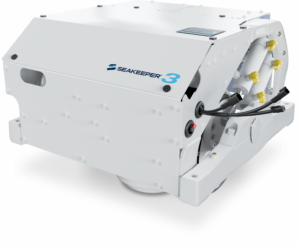
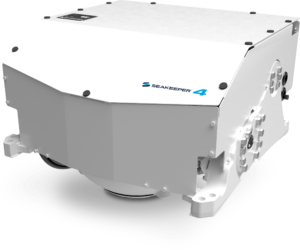
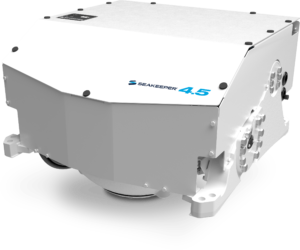


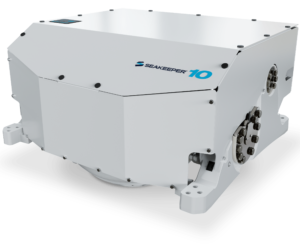


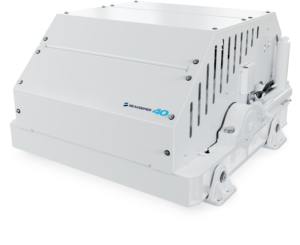
GYRO STABILIZER
Seakeeper 40
Typical boat length85’–110′
Boat weightup to ~115 t
Unit weight1,848 kg
Boat length and displacement ranges are preliminary selection guides from Seakeeper. Final model selection requires a vessel-specific assessment covering displacement, hull characteristics, intended use, available installation space, electrical supply and cooling-water requirements.
New build or existing yacht?
Plan stabilization into your new build
Discuss your preferred Seakeeper system with Summer Marine and your builder early. Model selection, structural support, equipment access, electrical supply and cooling arrangements should be reviewed together before installation is specified.
Assess a Seakeeper refit
For an existing yacht, start with a vessel assessment. Share the make, model, year, displacement and photos of the proposed installation area. We can help coordinate the selection and installation planning process with the vessel team and yard. Suitability is confirmed for the individual yacht, not by length alone.
Buying a yacht? Explore our yacht brokerage listings and discuss stabilization as part of your purchase planning.
Seakeeper Malaysia: common questions
Which Seakeeper model suits my yacht?
Use the model ranges as a starting point. Displacement, hull characteristics, usage and available installation space all matter. Contact Summer Marine for a vessel-specific assessment before ordering.
Can I add Seakeeper to an existing yacht?
A refit may be possible, subject to structural, access, power and cooling checks. Send the yacht specifications and installation-area photos so the practical requirements can be reviewed.
How do I request a Malaysian quotation?
Send your yacht model, build year, LOA, displacement and location. Ask for a quotation defining equipment, freight, applicable taxes, installation and commissioning so the scope is clear.
Where can I find technical specifications?
Each model above links to a Summer Marine product overview. Confirm dimensions, electrical and cooling requirements, installation instructions and warranty terms against the current Seakeeper manufacturer documentation before ordering.
What information is needed for a Seakeeper refit assessment?
Send the boat make, model, year, length, beam, full-load displacement and current location. Include photographs and measurements of the proposed space, equipment access, electrical supply and cooling arrangements. The review also needs structural mounting and future service clearances. See the official Seakeeper refit guidance for an overview.
What is included in a Seakeeper installation quotation?
Ask for the equipment model and a defined scope covering freight, applicable taxes, structural work, installation labour, electrical and cooling integration, commissioning and any yard charges. The total depends on the individual boat and installation plan; a unit price alone is not the complete installed cost.
How do I request support for an existing Seakeeper?
Share the model, serial number, operating hours, current yacht location and service history. For a fault enquiry, include the displayed alarm text and photographs where useful. Summer Marine can coordinate the appropriate next steps after reviewing the unit and reported issue.
Does Seakeeper offer an extended warranty?
Yes. Optional plans are available for eligible units still within their original factory warranty period. Total coverage, including the standard warranty, is 4 years or 2,000 SEA hours for Silver; 4 years or 3,000 SEA hours for Gold; or 5 years or 4,000 SEA hours for Platinum, whichever comes first. Purchase must be completed during the original warranty term, with registration and Seakeeper approval required. Contact Summer Marine with your model, serial number, in-service date and SEA hours to discuss the next steps.
Sources: Official Seakeeper guidance · Extended warranty terms
Can the warranty transfer when I buy a used yacht with Seakeeper?
Remaining warranty coverage may be transferred to a subsequent owner, subject to Seakeeper’s requirements. Provide proof of ownership, the unit’s serial number and its RUN and SEA hours. For an extended warranty, Seakeeper requires written transfer notice and supporting documents within 30 days of the ownership change. A transfer does not restart the warranty period.
Sources: Official Seakeeper guidance · Extended warranty terms
What is the difference between SEA hours and RUN hours?
RUN hours record how long the Seakeeper is switched on. SEA hours record active stabilization, with the brake unlocked. Time spent spooling up or running without stabilization adds RUN hours rather than SEA hours. Warranty hour limits use SEA hours, so provide both readings when requesting a warranty review.
Source: Official Seakeeper guidance
Does a Seakeeper need regular maintenance?
Yes. The sealed sphere does not make the whole system maintenance-free. External hydraulic and cooling components require periodic checks and servicing. Follow the current maintenance schedule and operation manual for your model, keep the installation dry and ventilated, and retain service records. Contact Summer Marine with the model and service history to discuss maintenance coordination.
Source: Official Seakeeper guidance
Does a Seakeeper work at anchor and underway?
Yes. Seakeeper gyro stabilizers reduce side-to-side roll both at rest and while underway. The result depends on the vessel, installation and operating conditions; it is not a promise to remove every type of motion or deliver the same roll reduction in every situation.
Source: Official Seakeeper guidance
Is Seakeeper Ride the same as a Seakeeper gyro stabilizer?
No. A Seakeeper gyro stabilizer targets boat roll at rest and underway. Seakeeper Ride is a separate vessel-attitude-control system intended to control motion while the boat is underway. They have different functions and installation requirements, so identify the product you are enquiring about before requesting a quotation.
Source: Official Seakeeper guidance
How can I check my Seakeeper warranty status?
Start with Seakeeper’s official warranty checker using the model and serial number. The online result is based on registration information and does not account for SEA hours. A qualified Seakeeper service technician must verify those hours, and coverage remains subject to the applicable policy and unit records.
Source: Official Seakeeper guidance
Buying or selling a yacht with Seakeeper?
Review the installed model, service records and equipment condition alongside the yacht’s sale particulars. Browse our yachts for sale in Malaysia and Southeast Asia, or read how to prepare yacht equipment records and photographs for a listing. For model selection, refit planning or existing-unit support, send Summer Marine the yacht and equipment details for review.
Request Seakeeper selection, refit or service support
For a new system, send your yacht model, LOA, full-load displacement, build year, installation-area photos and current location. For an existing unit, add its model, serial number, operating hours and service history.